How the Role of AI in Healthcare Can Improve Your Life?
Published: 2 Aug 2026
Imagine a doctor going through stacks of reports every day. Each report carries tiny clues about a patient’s health, and missing even a small detail could slow treatment. This is exactly where the role of AI in healthcare steps in and makes a difference. These systems quickly check medical images, lab results, and patient records, pointing out anything unusual that deserves attention.
For example, some hospitals now use digital systems to review X-rays and flag subtle signs of lung conditions. The doctor can then focus on these areas and make timely decisions.
What is AI in healthcare?
In hospitals, digital health tools read medical information quickly and notice patterns that might be missed by humans. They support doctors in making decisions without replacing them. By handling routine checks, these systems let doctors spend more time with patients.
- Learning how these tools work is helpful for everyone. They show how hospitals use technology to provide care that is faster and more accurate.
- More than just speed, these systems can find trends across many patients, helping doctors identify potential health risks sooner.
Why Does Healthcare Need AI Today?
Hospitals today are busier than ever, and doctors manage long lists of patients and test results every day. Staying on top of everything can be overwhelming. Digital systems help by reviewing patient records and histories quickly, flagging anything that needs a closer look.
- For instance, some hospitals use tools that monitor vital signs in real time. If a patient’s heart rate or blood pressure changes suddenly, the system sends an instant alert to the doctor.
- The doctor can act immediately, helping prevent small problems from becoming serious.
Main roles of AI in Healthcare
Digital tools are changing how hospitals manage daily care. They help doctors notice health issues early and process reports faster. By keeping patient records organized and tracking health, these systems make treatment smoother and more reliable. Working quietly in the background, they give doctors more time to focus on patients.
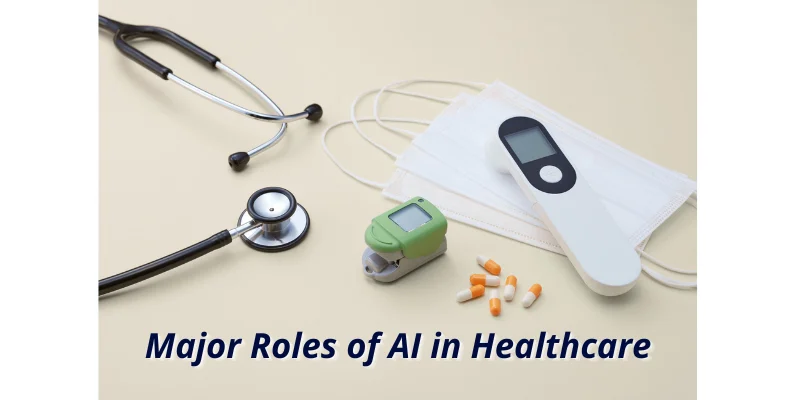
Here are the main ways these tools assist in healthcare:
- Reviewing X-Rays and Scans
- Checking Blood Test Results
- Scheduling Appointments
- Monitoring Heart Rate
- Tracking Blood Pressure
- Answering Patient Questions
- Keeping Patient Records Up to Date
- Detecting Fever or Infection Early
- Guiding Patients with Simple Health Tips
- Sending Medicine Reminders
Let us learn the applications of the role of AI in healthcare in detail.
1. Reviewing X-Rays and Scans
Doctors examine X-rays and scans to spot health issues, but tiny details can be easy to overlook. Digital tools review these images quickly, highlighting areas that may need closer attention. This support helps doctors make faster, more accurate decisions, catching problems early. Patients get their results sooner, and small concerns are addressed before they develop into bigger problems..
2. Checking Blood Test Results
Blood tests show key details about a patient’s health.The system reviews blood tests rapidly and flags unusual readings. Doctors can focus on the most important findings, speeding up treatment and care.This saves time and helps patients get the right care quickly. It makes the process smoother for both doctors and patients.
3. Scheduling Appointments
Hospitals and clinics often have full schedules and long waiting lists. Smart tools manage schedules, send reminders, and streamline clinic workflows. Patients get timely visits, and staff spend less time juggling appointments. Patients get timely visits without long delays. Doctors can spend more time with each patient instead of handling paperwork. This keeps hospital care running smoothly and reduces stress for everyone.
4. Monitoring Heart Rate
Doctors need to watch a patient’s heart closely, especially in hospitals. Continuous monitoring tracks heartbeats in real time and alerts doctors to sudden changes, allowing quick action and giving patients peace of mind. This helps nurses and doctors act quickly. Patients feel safer knowing someone is always keeping an eye on them.
5. Tracking Blood Pressure
Blood pressure can rise or drop unexpectedly. These tools measure blood pressure constantly, flagging abnormal readings so doctors can intervene before serious issues occur. This lets doctors make adjustments faster and avoid serious problems. Patients get care on time and reduce the risk of complications.
6. Answering Patient Questions
Patients often have common questions about their health or treatment. Certain systems give patients quick answers about medications, schedules, or simple care guidance, saving time for both patients and staff. This saves time for both patients and staff. Patients get clear information without waiting, and doctors can focus on more serious tasks.
7. Keeping Patient Records Up to Date
Hospitals have thousands of records, and mistakes can happen. Digital systems keep patient records current and accurate, helping doctors make confident decisions without missing details. This helps prevent confusion and ensures every patient’s care is accurate. Patients can be confident that their history and treatment details are correct.
8. Detecting Fever or Infection Early
A slight fever or infection can be a warning sign. These tools monitor temperature and infection signs, alerting staff early so treatment can begin before conditions worsen. Doctors can check the patient right away. Catching infections early helps patients recover faster and prevents the problem from getting worse.
9. Guiding Patients With Simple Health Tips
Patients sometimes need simple advice on diet, exercise, or daily care. Patients receive simple reminders for diet, exercise, or daily care, helping them maintain good habits between visits. This helps patients stay on track between visits. Doctors can then focus on more complicated health issues while patients get support at home.
10. Sending Medicine Reminders
Taking medicines on time is important for recovery. Automated reminders ensure patients take medicines on time, keeping treatment consistent and reducing risks. This keeps treatment consistent and helps patients feel more confident about managing their care.
Benefits of AI in Healthcare
Hospitals can be busy and stressful for both patients and doctors. These tools make it easier for doctors to understand a patient’s condition and plan care without confusion. These tools give doctors a clear picture of a patient’s health and help them focus on the care that matters most.
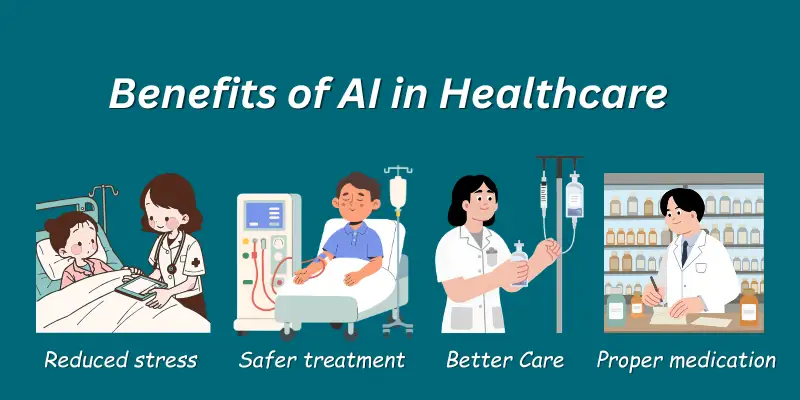
- Faster Decisions: Quick insights help doctors act without delay.
- Safer Treatment: Alerts catch errors before they affect care.
- More Time With Doctors: Doctors spend less time on routine tasks.
- Better Daily Care: Reminders keep patients on track with medicines and checkups.
- Reduced Stress: Staff can focus on patient care, improving workflow.
- Early Attention: Small health changes are detected before problems worsen.
- Clear Communication: Patients receive understandable updates.
- Confidence for Families: Families trust that care is well-monitored.
- Consistent Follow-Ups: Automated reminders keep patients on schedule.
- Peace of Mind: Organized systems reduce stress for both staff and patients.
Challenges of AI in Healthcare
While AI brings many benefits, hospitals still face some real challenges. These problems affect patients, doctors, and staff, and understanding them helps explain why healthcare is not that easy.
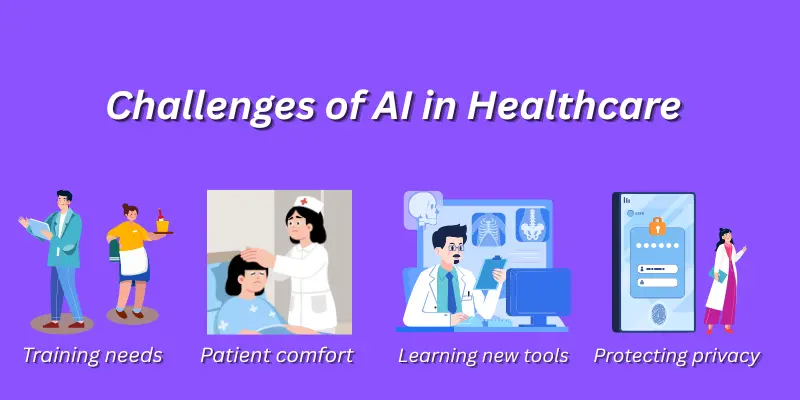
- Learning New Tools: Staff and patients may find systems confusing at first.
- Protecting Privacy: Patient data must be handled securely.
- Setup Costs: Small clinics may struggle with expensive software or equipment.
- Training Needs: Proper use requires staff education.
- System Integration: Tools must work smoothly with existing workflows.
- Dependence on Power and Internet: Outages can affect care.
- Patient Comfort: Technology should not reduce personal attention.
- Maintenance: Systems need regular updates to work reliably.
- Adapting to Change: Staff must adjust to new routines.
- Balancing Technology and Human Care: Tools support but don’t replace doctors.
Future of AI in Healthcare
Healthcare is evolving. Hospitals are exploring connected systems, smoother workflows, and more personalized treatment. Departments may stay interconnected, letting staff access lab, pharmacy, and patient records instantly. Doctors can plan care based on past records and patient health patterns, improving confidence in treatment. Tools will help doctors and nurses track tasks, patient notes, and reports while patients access information easily. Hospital visits can feel calmer and more organized.
Global Adoption of AI in Healthcare
Across the globe, medical facilities are learning to coordinate care more smoothly. Staff can check on patients instantly, organize rooms and equipment efficiently, and keep patients updated on treatment or prescriptions. Even simple online guidance helps patients decide when to visit a clinic, making care more accessible and less stressful. These examples highlight the practical role of AI in healthcare, showing how modern tools support hospitals in managing patients and records efficiently without being complicated or futuristic.
- Predictive Systems in Hospitals: In 2025, about 71% of U.S. hospitals reported using predictive tools to identify potential health risks early.
- Connected Healthcare: The global digital healthcare market is expected to reach $110 billion by 2030, showing growth in smart hospital systems.
- Appointment Reminders: Many clinics now send messages or notifications, helping patients stay on schedule and avoid missed check-ups.
- Faster Test Reviews: Lab results and medical records reach doctors quickly, allowing them to make decisions without waiting for paperwork.
- Digital Adoption by Doctors: Around 66% of physicians in 2024 used digital systems to summarize patient notes, giving them more time to focus on care.
Final Note
In this article, we’ve explored the role of AI in healthcare in detail, from helping doctors review X-rays and blood tests faster to keeping patient records organized and spotting health issues early. These tools make daily hospital work smoother, improve patient care, and give doctors more time to focus on what matters most.
My advice, guys, is to pay attention to how hospitals are using these systems in real life. Understanding these tools helps you see how modern healthcare is becoming faster, safer, and more patient-friendly.
Don’t skip the next part of the FAQs, the last part of your guide, and drop a comment if you have any confusion.
FAQs
Here are some of the most frequently asked questions about the role of AI in healthcare:
The role of AI in healthcare is to help doctors and hospitals manage patients and records in a clear and organized way. These tools can track patient health, remind staff about tests, and make daily care easier to handle.
Hospitals use digital tools to organize patient records, monitor health, and schedule visits. Using AI in healthcare helps staff stay on top of tasks and focus more on helping patients.
The impact of AI on healthcare can be seen in quicker test checks and better tracking of patient health. Hospitals also need to train staff and manage costs carefully while using these tools.
Many ask, “Can AI replace doctors?” The answer is no. AI solutions in healthcare can guide staff and organize information, but doctors are needed to make decisions and explain treatments.
Doctors can check lab results, scans, and patient history faster with digital tools. Using AI in healthcare supports doctors in planning treatments and keeping patient care on track.
Digital systems can protect patient information when hospitals follow proper security measures. By combining AI with cybersecurity in healthcare keep records organized while keeping personal data secure.
By reviewing tests and patient history with digital tools, staff can notice potential health issues earlier. This shows the impact of AI on healthcare in catching problems before they get worse.
Yes, even small clinics can track patients, send reminders, and organize appointments. These AI-based systems in healthcare practices make daily patient care less confusing for staff and patients.
Hospitals in many countries are trying new digital methods to handle patients and records. Watching these trends shows how healthcare services are improving in different parts of the world.
Patients get reminders for visits, updates on treatments, and clear guidance for follow-ups. These steps, part of AI solutions in healthcare, help patients feel more aware of their care and next steps.






- Be Respectful
- Stay Relevant
- Stay Positive
- True Feedback
- Encourage Discussion
- Avoid Spamming
- No Fake News
- Don't Copy-Paste
- No Personal Attacks
- Be Respectful
- Stay Relevant
- Stay Positive
- True Feedback
- Encourage Discussion
- Avoid Spamming
- No Fake News
- Don't Copy-Paste
- No Personal Attacks
